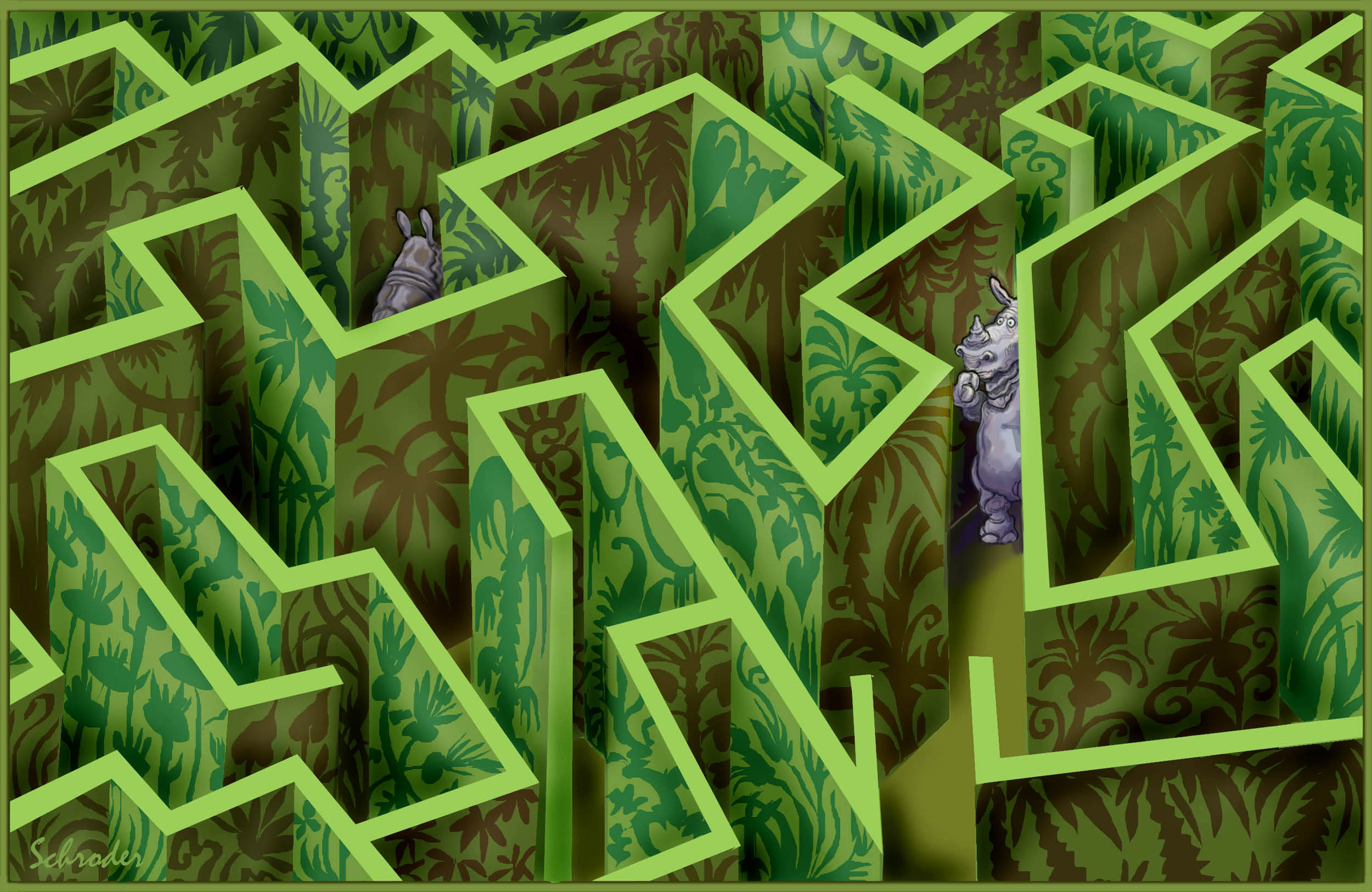
The numbers of Us Javan Rhinos are so few that We have trouble locating one another in the Wild. Our Wild is pretty jungly and convoluted. Determination is what is required under the circumstances, but that We have, a-plenty.

The numbers of Us Javan Rhinos are so few that We have trouble locating one another in the Wild. Our Wild is pretty jungly and convoluted. Determination is what is required under the circumstances, but that We have, a-plenty.
Some critters hold onto Tradition, assuming it will see them through. Looking backward mostly means ignoring the present. So, though We are utterly proud of our RhinoPast, We are geared primarily to see how the present is changing to accommodate tomorrow- which is on its way, like it or not. Or at least, it always has been up to now.

In the Wild no Rhino dies of Old Age. We live each day upbeat, perfectly aware that our individual part of the project may be done at any time. We don’t let that idea make us blue. But We don’t forget it either.

The trickiest part of the Rhino’s span is Adolescence, the time when We strike out into the world, full of Spunk and unrestrained by Experience. That said, any of Us can go at any time of life, and the dragons We face may arrive at any moment.
These dragons are Famine, Disease, Competition, Confrontation, and Greed. These are not the Deadly Sins, these are the Facts of Life- in the Wild. We do not fret over the matter; We’d get depressed. We strut along, enjoying the time We are given. “Tra la la”, that’s what We say. Feel free to quote Us.
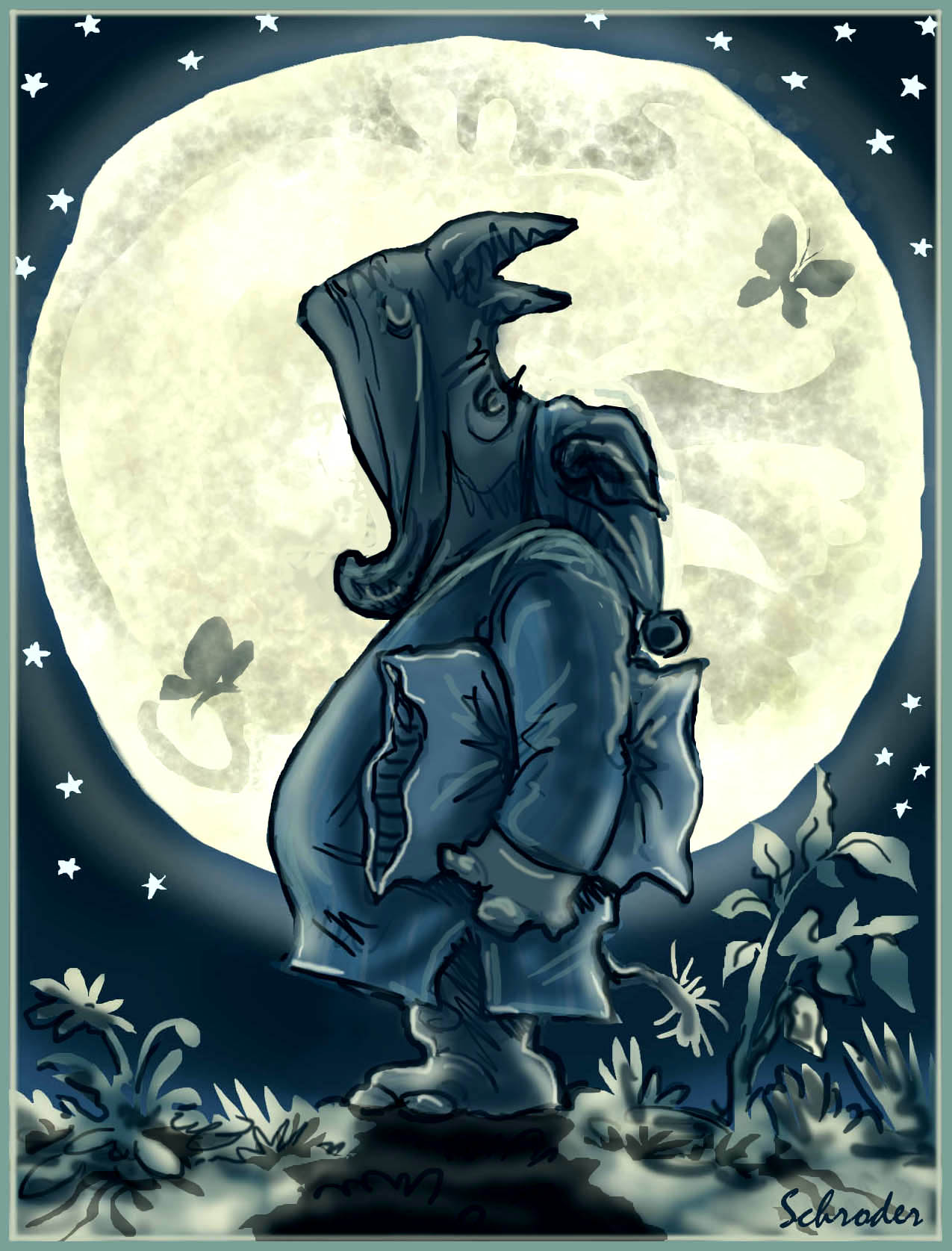
In the Wild, nobody really sleeps the way you all seem to do. If We allow our sensors to shut off completely, We wake up with some strange critter chewing our ankles. Or worse. This is especially true for those of Us that just plop down on the ground at naptime. So although We may appear to be comatose, We are just reinvigorating ourselves for the next round of activity, most likely chewing. And cogitating.
We mostly sleep when We feel like it, both day and night. Sometimes more, sometimes less. Sometimes standing.
Babies sleep soundly, but they are relying on Mom to confront any problems. Moms know how to do that. Moms know everything.
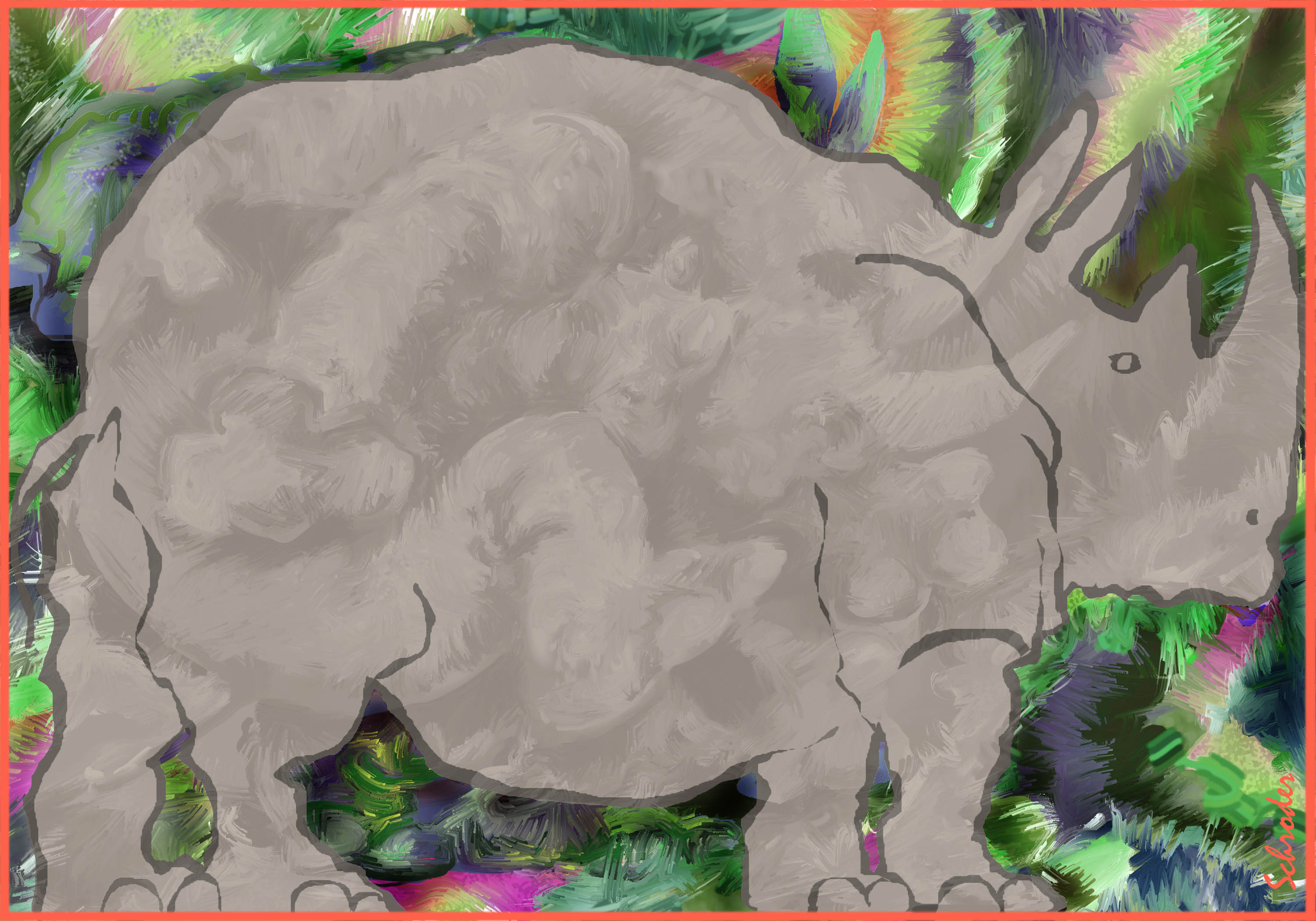
We are reliably informed that this is how you think of us, roughly speaking. Big, Gray, Stolid.
The ticking of a watch may be comforting to you, but its regularity sometimes gets on our nerves. We prefer the natural idea of the sundial. We are not interested in the hour anyway, and the sundial is relating to the sun, so We like that. We are mostly on duty to one degree or another 24/7, even when asleep. No great reason to be particular about one hour or another.
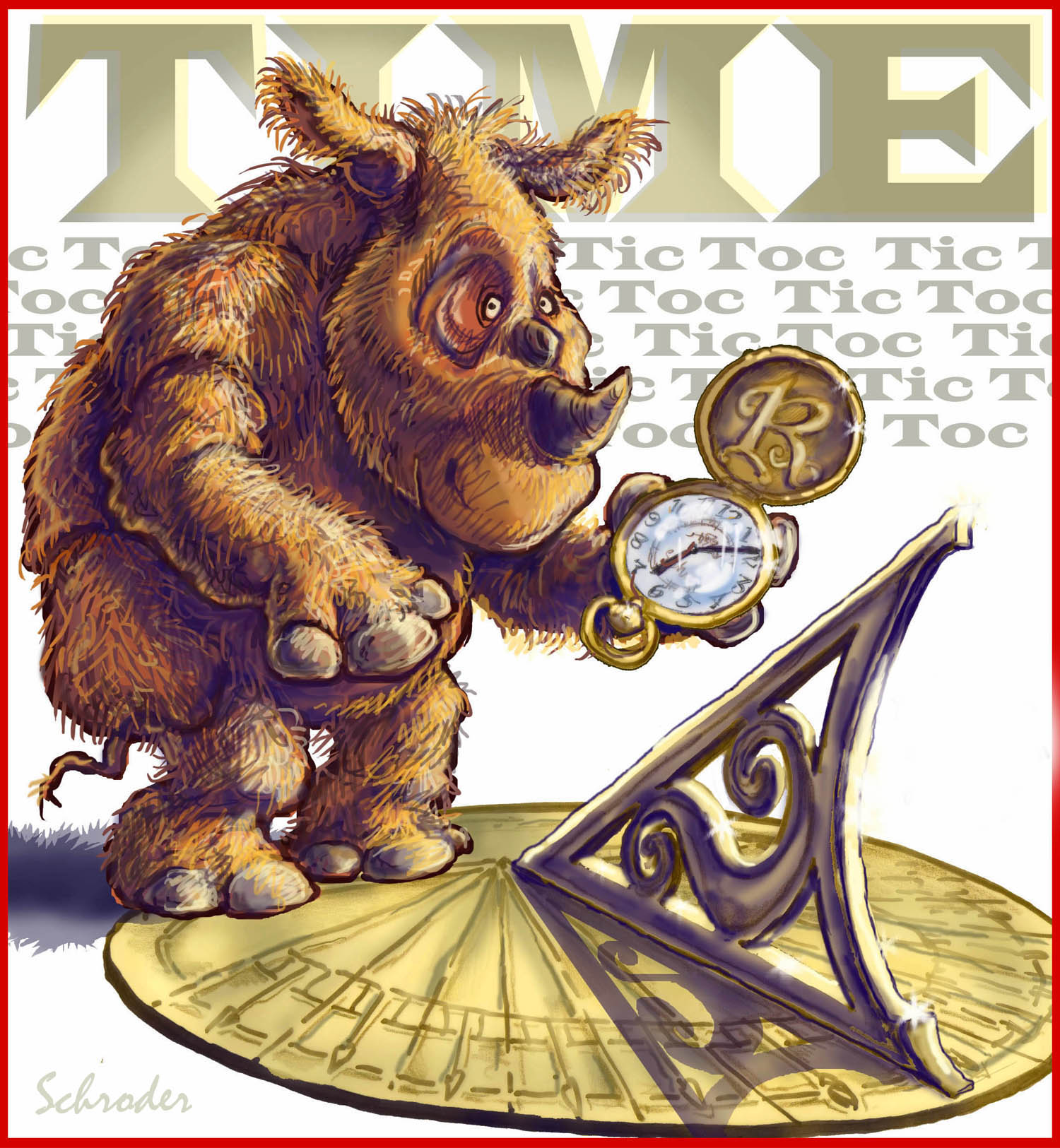
For Us, the issue is simple; is the sun up yet or not? Day or night dictate which playmates will be active in the Wild. Many critters only get going at night or by day. Not We. We are ready to chew and make profound discoveries, around the clock… as it were.
For those of you who are wondering, our model here is a Sumatran Rhino, which explains the hairiness. There is a long tradition of hairiness among Us Rhinos, though only one family is embodying that distinction at present. Who knows what’s on its way? Next year We may all be awash in fuzz, striped or spotted. Nature has a unique sense of humor; why fight it?
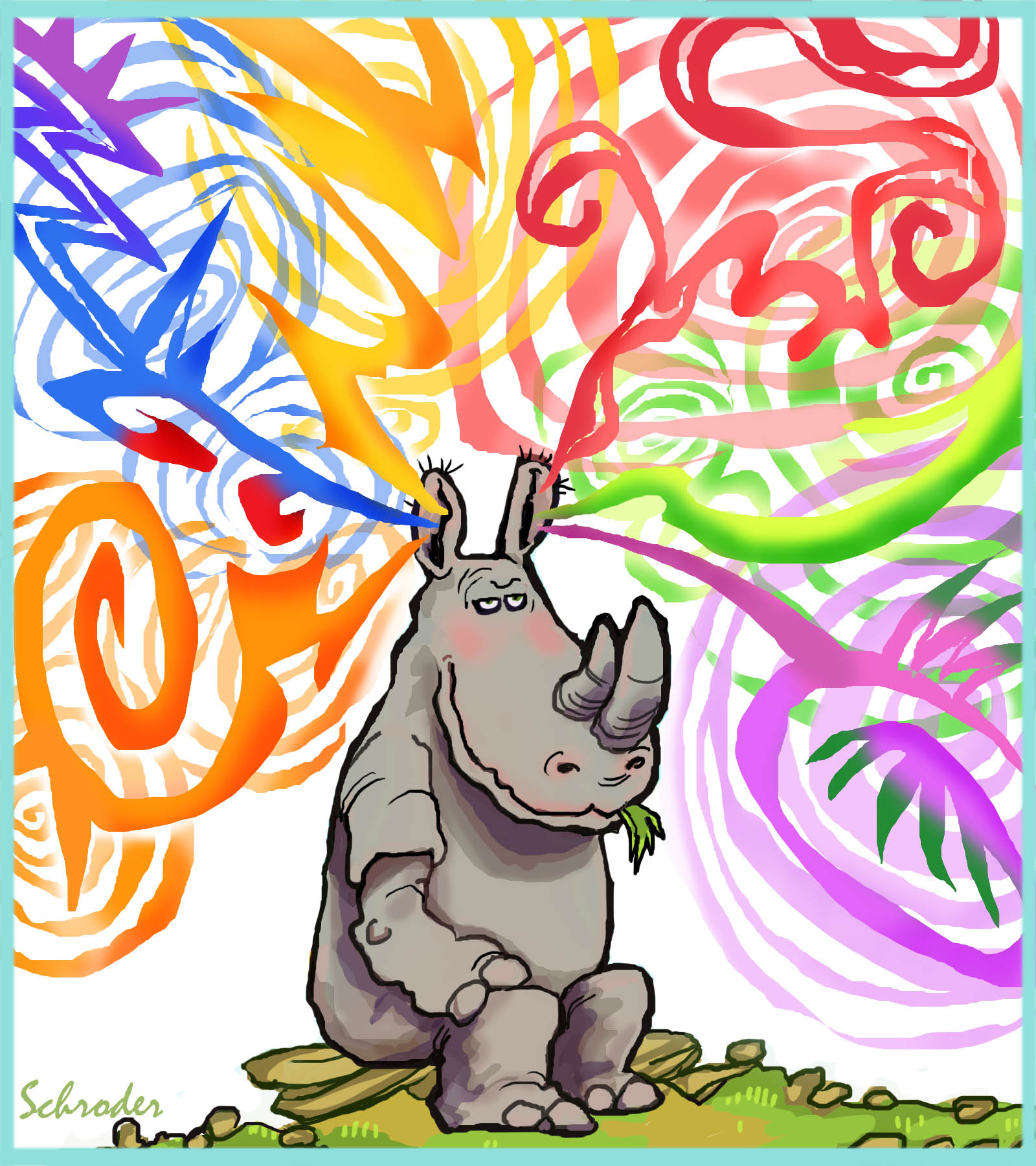 In the Wild there is a non-stop symphony of sound. The orchestration shifts with the hour, the season, the weather, plus the resident population. There are infinite sources for sound, noise, music, etc., all of them engaging our attention.
We mention this because We Rhinos have extraordinary hearing, as nifty as our sense of scent. Amazing.
Here sits the happy Rhino, chewing and listening (and sniffing). What grabs her attention?, you ask. Answer: Silence. Silence is Nature’s five-star Alarm.
What will she do? She will figure out what caused the Silence. One thing to recall is that she is probably upwind of the problem, or she would have smelled the problem longsince.
Will she run away, as most sensible creatures would, or does she investigate to reestablish local serenity? Who can tell? The girl has options…
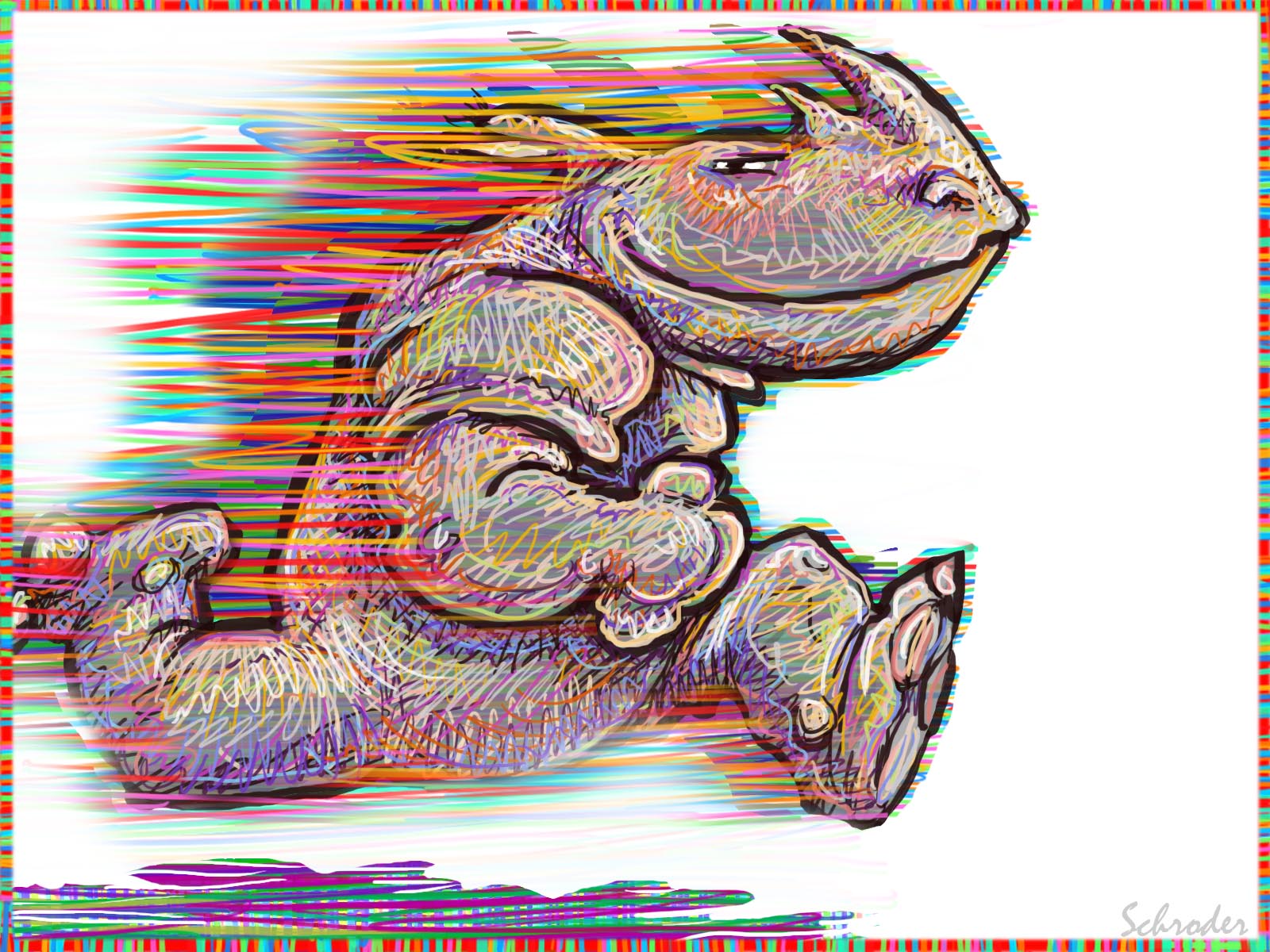
We just mentioned that We are pretty quick. We were not fooling. We can run at 35 mph, which is about the same as the standard horse. (We are cousins, after all.) Pretty good, considering our bulk. Quick-ity Quick.
Also, We can turn on a dime, though there is little spare change in the Wild for Us to practice with.
Generally, We do not run around much. Takes too much energy, and energy means more chewing and chewing and chewing.

It is true that our eyes are not as sensorially swell as our noses or ears. Way Back When they say it was better, but that may have been before We started growing horns. We are unclear on that topic; it was millions of years ago, like lots of millions. However, what is for sure is that it is hard to see around a horn or two in the middle of the face. Even today.
SO in the Wild our noses and ears are the First-Alert System. (Or sometimes crazed birds flapping around.) Then We look for any unusual activity. Then mostly We trot away. But sometimes We go Quickly to check it out. We are pretty Quick, whatever you might have thought. Often the disturbance runs away pretty Quick on its own.
This lens-mirror doofangle in the picture is nonsense, since there are no Optometrists in the Wild. Might be fun to try out a doofangle, but probably We’d flip out from what We saw all of a sudden. We need to edit stimuli, to avoid overheating.
Here is a representation of our Family, all 55 Million Years of it. It cannot begin to cover the range of sizes, styles, and looks which We have had during that period. As you blog along, We will occasionally point out Historical Member groups for one feature or another, like a bus tour through Hollywood.
You can already see where the problem will lie. Many Family Gangs and Clans have been successful for 10 million years and more. During those stretches, We have had multiple internal shifts, looked different ways, lived different places, pursued varied interests. We constantly confront the fact: We are Too Stupendous! So We marvel along with you; We are Some Bunch! 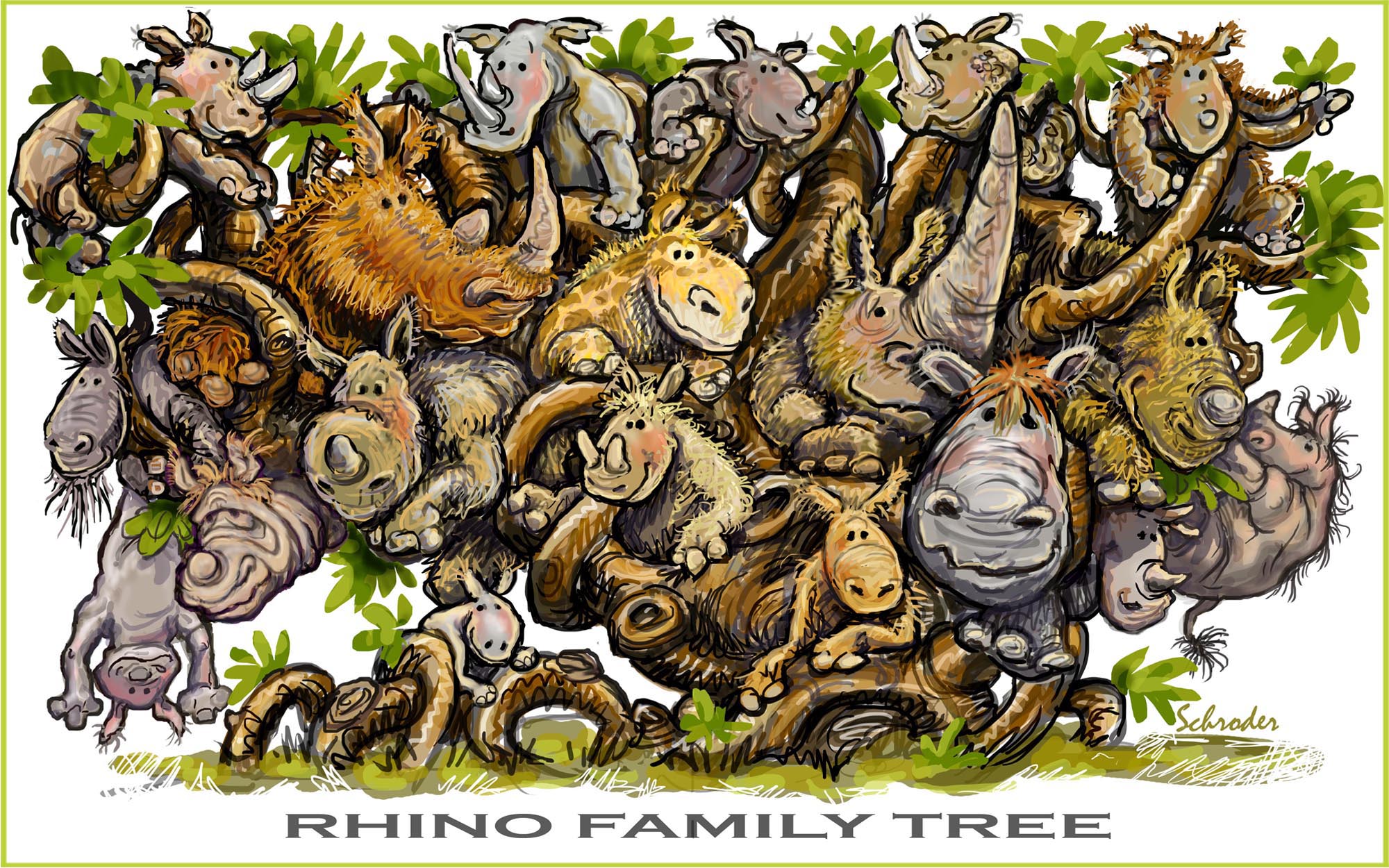 You will notice at a glance that not all our Family Members have horns. They don’t and didn’t. Horns are an exotic feature which We happily display, but it is not the prime factor. That essential pulse of Us is RhinoHeart. With RhinoHeart, one is Rhino. Without it, one is… well, something else.
 Your Inner Rhino