Kerosene Scene

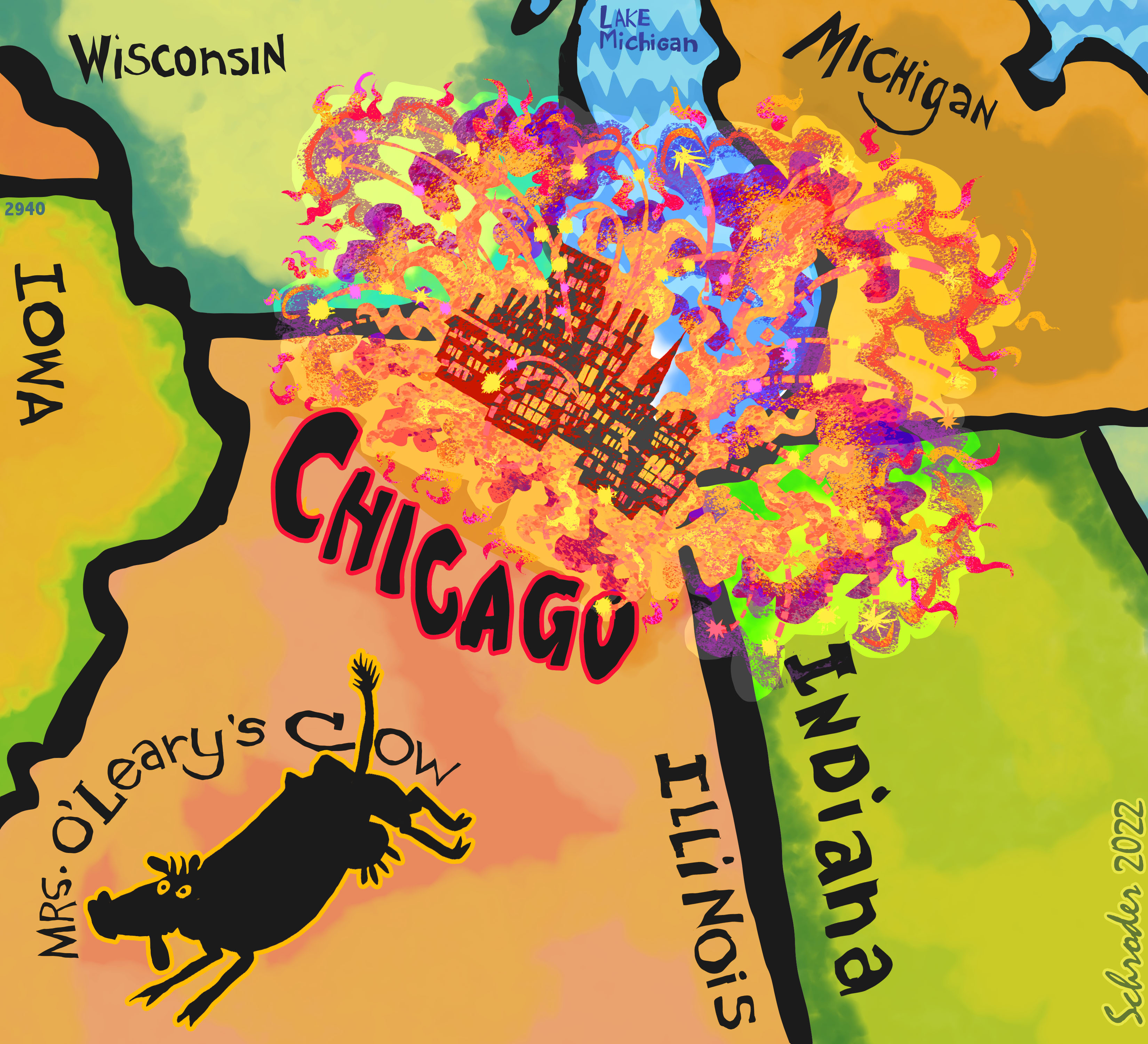
On the night of October 8, 1871, a fire broke out in Chicago, Illinois, burning up a chunk of the city and causing death and destruction. The fire lasted 3 days.

The tale is that Mrs. O’Leary’s cow kicked over a kerosene lamp, igniting the straw in her barn. True or false, nobody knows for sure. It makes a colorful myth anyway.

Note to our Readers: no Rhinos were hurt creating this post. Or Cows, for that matter.
Critter Mystique

Rhinos enjoy ourselves in many ways, not the least of which involves an Air of Mystery. A little consideration will inform anybody about what We’re actually up to, so if anybody is confused, just try that short route to Insight. Day or night.

If We are hungry, thirsty, or pooped, We address the situation by the easiest solution available. If our usual solutions are not working, We hold on til they do. Easy peasy.

Rhinos: Tons of Mystery, more or less. Stealthy and astonishing, that’s Us.

To and Fro

We are safely returned from the Reunion. It was a happy get-together, so many things the same and all of them different, or open to new interpretation… or permission to just forget about them. Too far under the bridge.

We are struck with how many fine folk We have known. That knowledge is always imperfect, and yet, now those failures of communication are mostly insignificant.

Honest sentiment is a pleasure We sometimes overlook. It’s rejuvenating to rejoice in the company of good folk. We don’t earn recognition, We are are born to share.

Hints

We Rhinos have never been good at Hints. They usually involve partial bits of news, leaving the Rhino to figure out what the puzzling business means, assuming it means something.

The smug critter delivering the Hint knows what is what, but only reveals the tip of the iceburg, leaving Us to stew. We then experience internal disquiet.

Rhinos are not often good at reading between the lines.

The Rosetta Stone

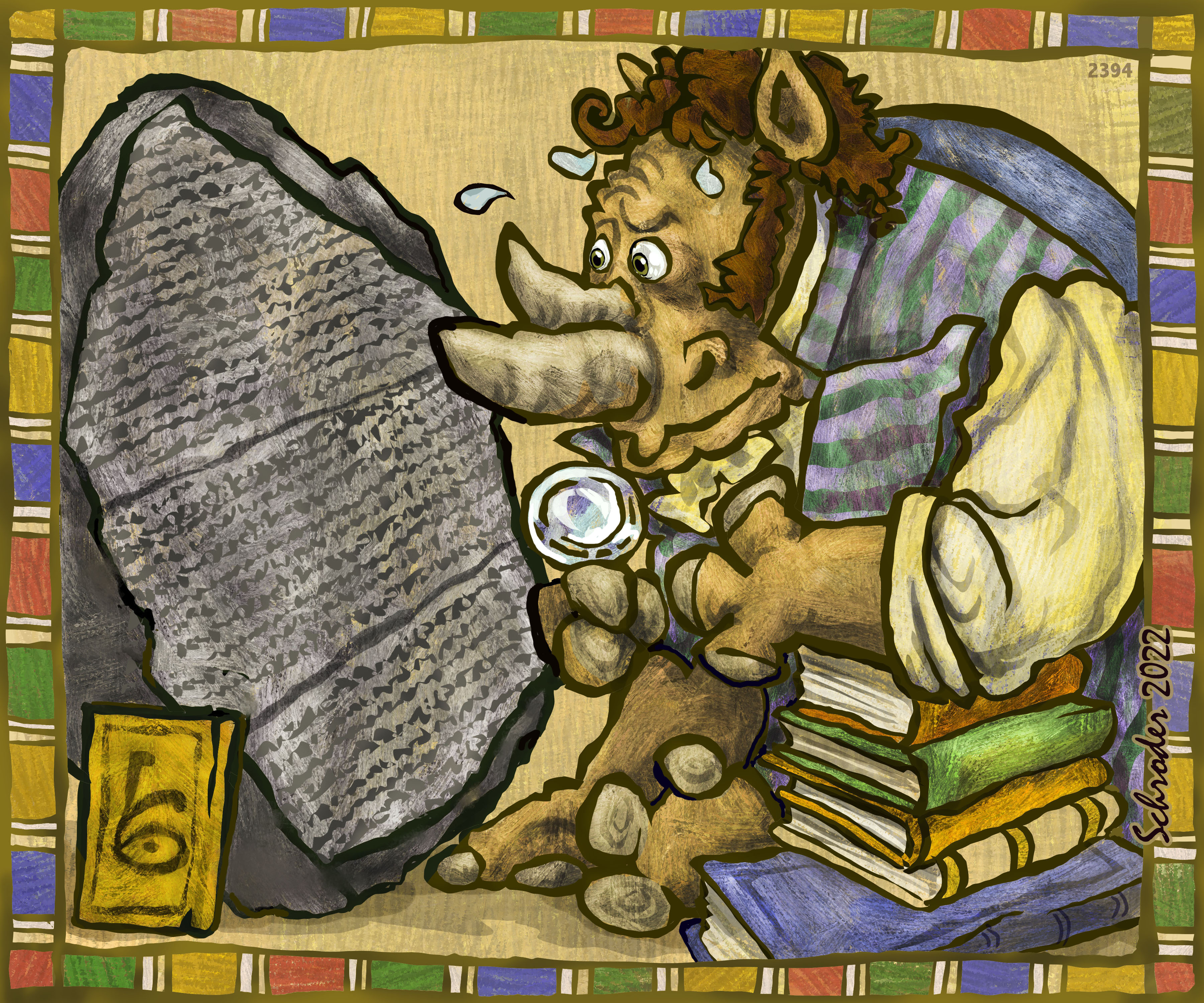
M. Jean-Francois Champollion presented his work on the decoding of the Rosetta Stone, exactly 200 years ago today! The carved messages on the stone were in 3 ancient languages, 2 Egyptian and one Greek. Champollion’s translation was a momentous accomplishment.

The message was banal, but the system of decoding it meant that carvings all over Egypt could now unfold their secrets. Before this discovery, ancient languages and peoples were poorly understood, if at all.

M. Champollion was French and the Stone itself was in London in the British Museum. Linguists everywhere, as well as historians and archaeologists were crazed by this progress. For his work, M. Champollion is known as the Father of Egyptology.

Well worth reading about, say We Rhinos.