There is a great deal to see in the Wild, and We Rhinos see it. We are often struck by the variables of the Self making the observation. Are We our morning selves, or our bedtime Selves? Whatever We are observing, We are balancing multiple Observations and Impressions, adjusting, resolving our thoughts.
We are blessed with these Capabilities, but these Capacities also create delicate Responsibilities.
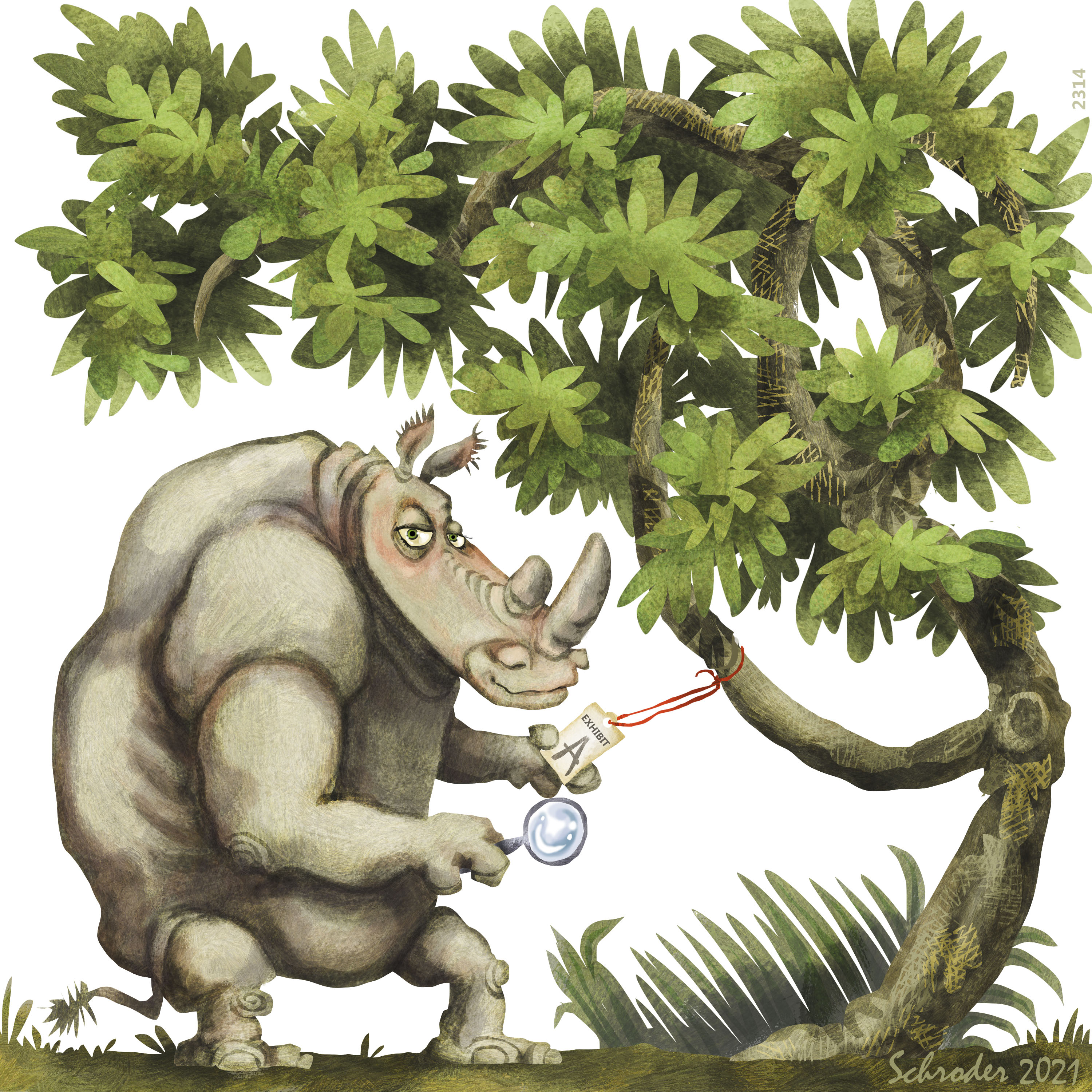
Most Rhinos like a good old-fashioned Mystery: Why something happened to somebody somewhere and if so, why not? The solution to the riddle usually requires Clues and Alibis and Evidence.
Rhinos enjoy finding Evidence while poking through the shrubbery. But what We are supposed to do with it is part of the Mystery. Also, different species define Crime in differing ways. We roll our eyes in frustration- after We have looked cunning and suspicious.
It’s all good fun for a short time, then Rhinos go off for lunch.
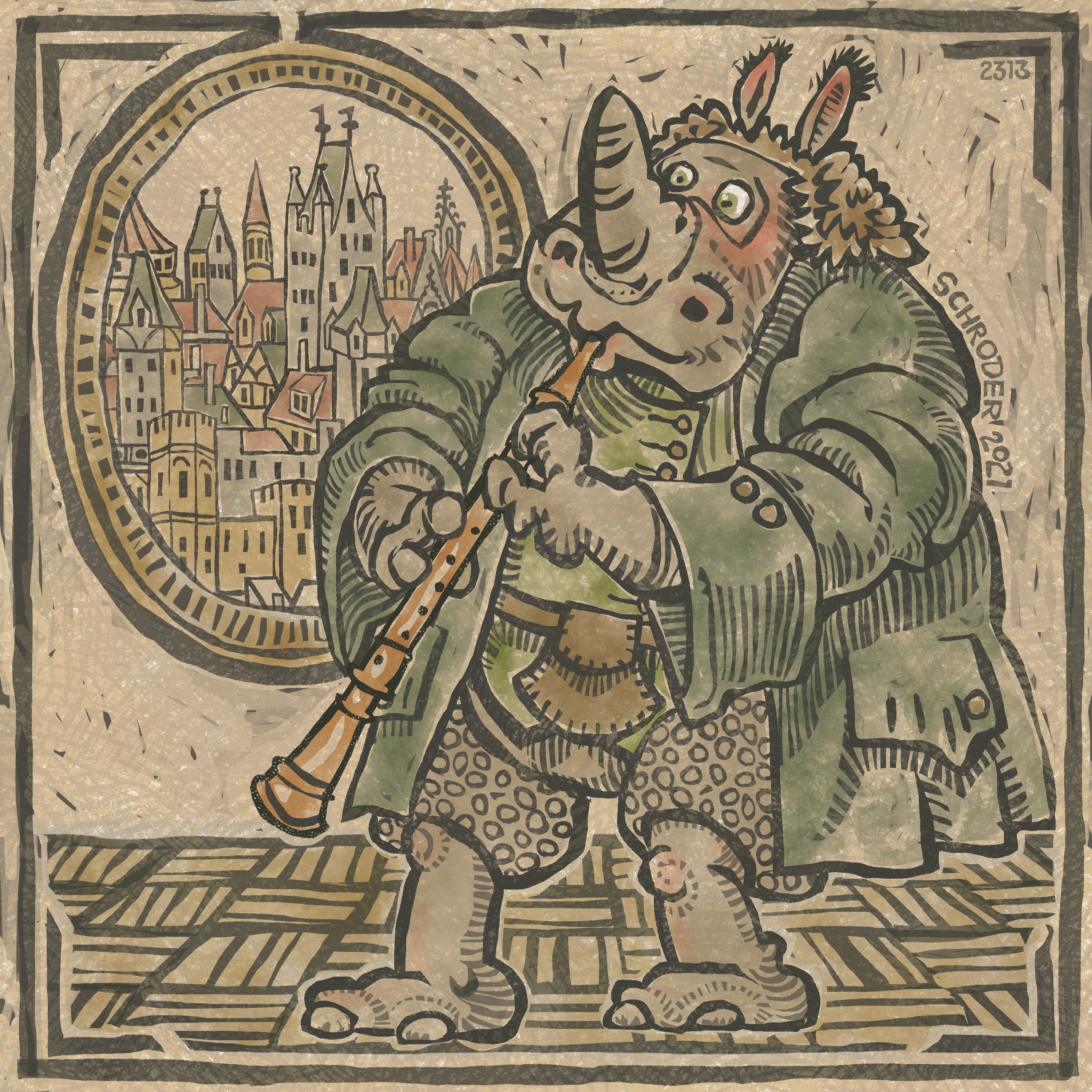
Today We wanted to point out the accomplishments of Mr. Johann Christoph Denner, who in 1690, invented the Clarinet. It did not have all the fancy keys it has today. It was similar to a Chalumeau, so similar infact that We Rhinos can’t see the difference. But then, We don’t play either instrument.
You can see Nurnberg, Germany (not Nuremburg) out the window in this historically troubled image. Also, if you look up Mr. Denner, you will see a lot of portraits of JS Bach, We don’t know why. Better that than Grover Cleveland perhaps.
Research is all very well, but it does make Us wonder. We at YIR like to think We are passing along solid information, but it can be challenging.
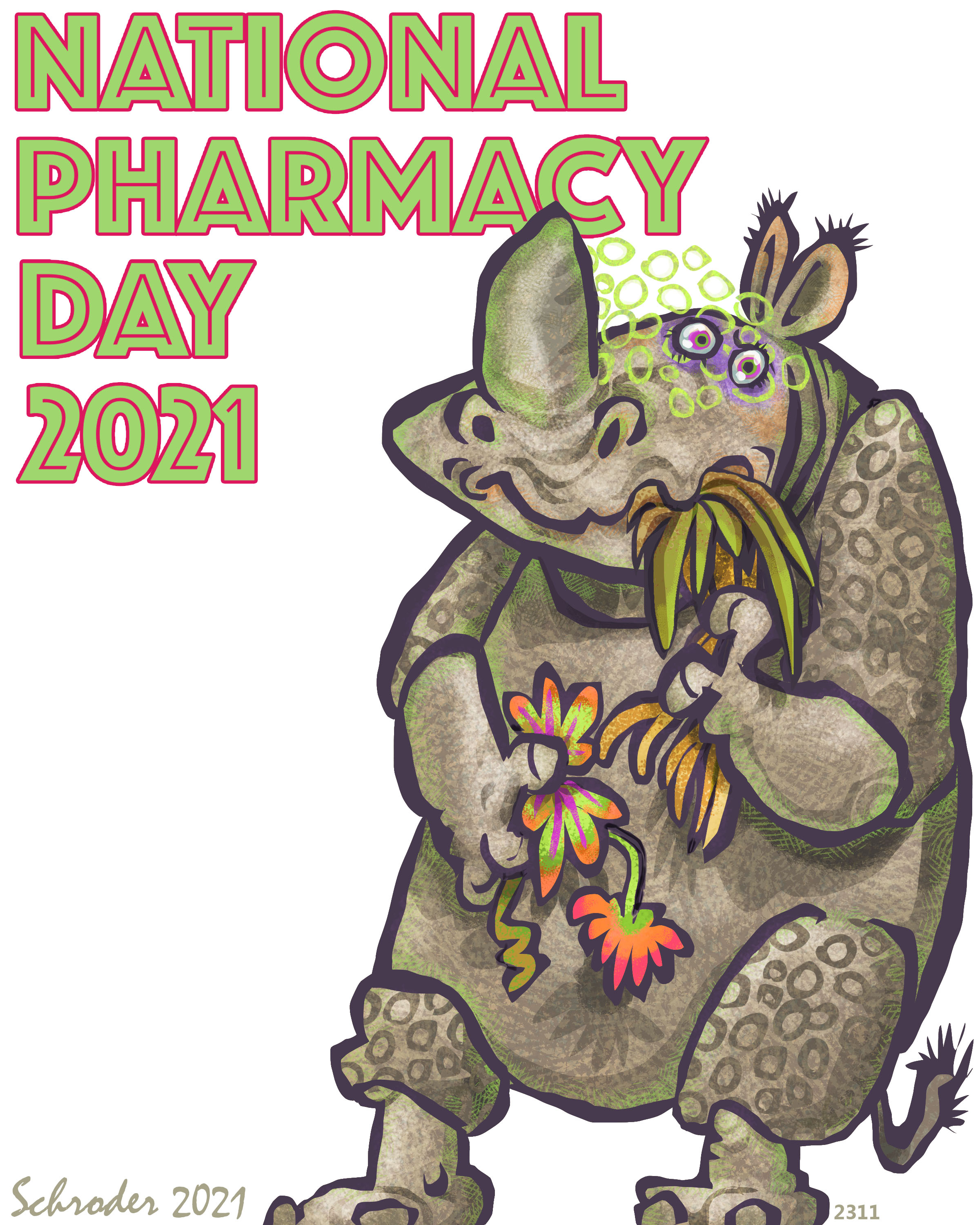
Today is National Pharmacy Day. ‘Your Inner Rhino’ extends thanks and best wishes to those in the healing arts, in whatever area of expertise.
Rhinos are generally healthy, which is a good thing, since We have no medical resources in the Wild, other than those provided by Nature. We instinctively know what to munch to address most situations. We usually get it right.
Time is our best friend in realigning our interior issues. Plus a lot of water.
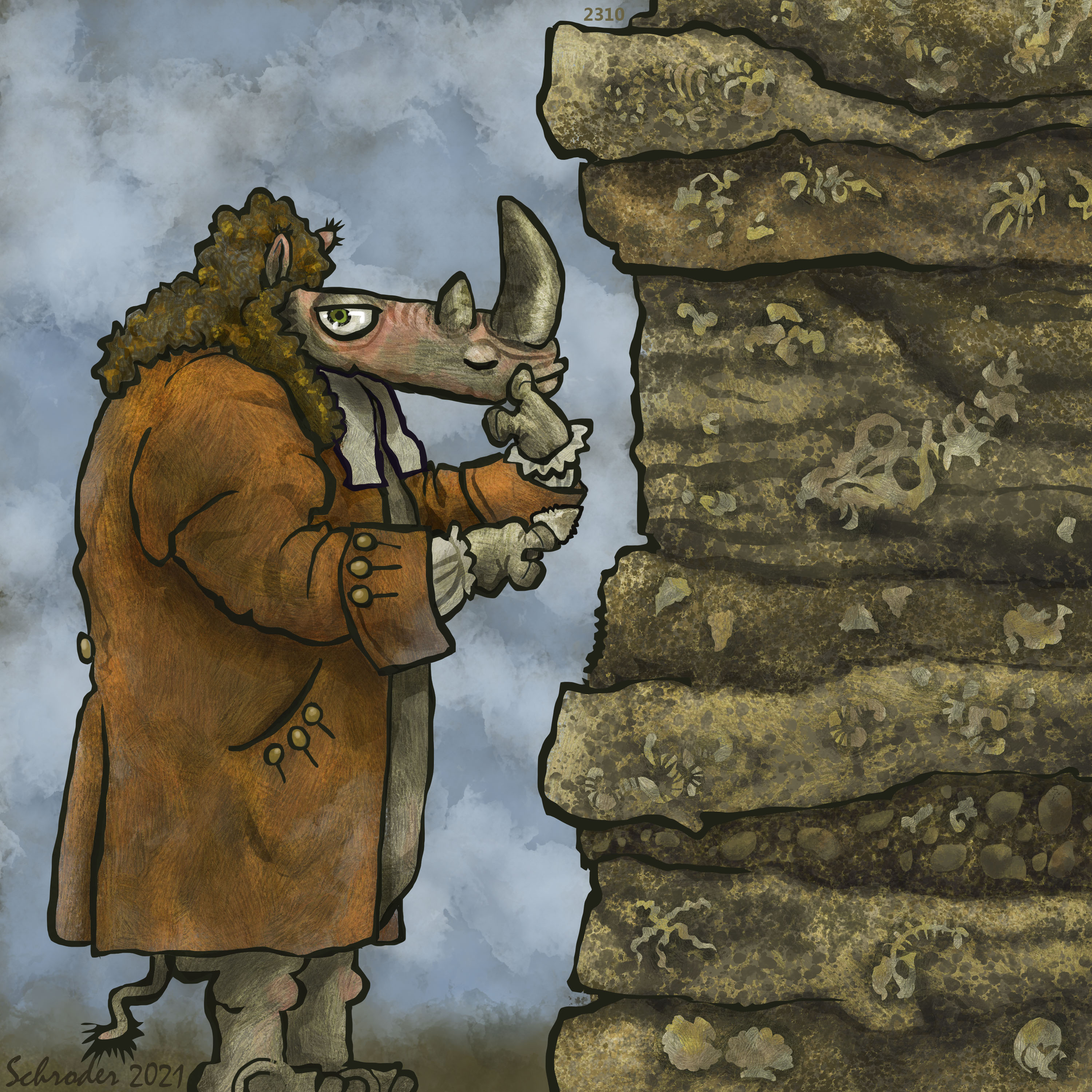
Mr. Nicolas Steno, b. 1638, in Copenhagen, was a fellow of many abilities. He was a paleontoogist, geologist, a medical doctor, and ultimately, a Catholic bishop. A busy man, all over Europe. He is remembered for his Theory of Stratigraphy; he published his ideas in 1669.
Stratigraphy is the idea that each layer of rock forms on the rock already there, and builds up with time. The new layer is fairly even, but eventually the earth buckles or shifts, disrupting the layers- not in order, but in relative location. By studying these layers, We can see what was going on when the layer formed, what plants and animals are fossilized in each layer. The top layer is the newest. It takes more time than any Rhino could imagine.
Like many great discoveries, it all seems obvious, once somebody points is out. It makes Mr. Steno a Founder of Modern Geology. (Back in Denmark, Mr. Steno was called Neils Steensen, FYI.)
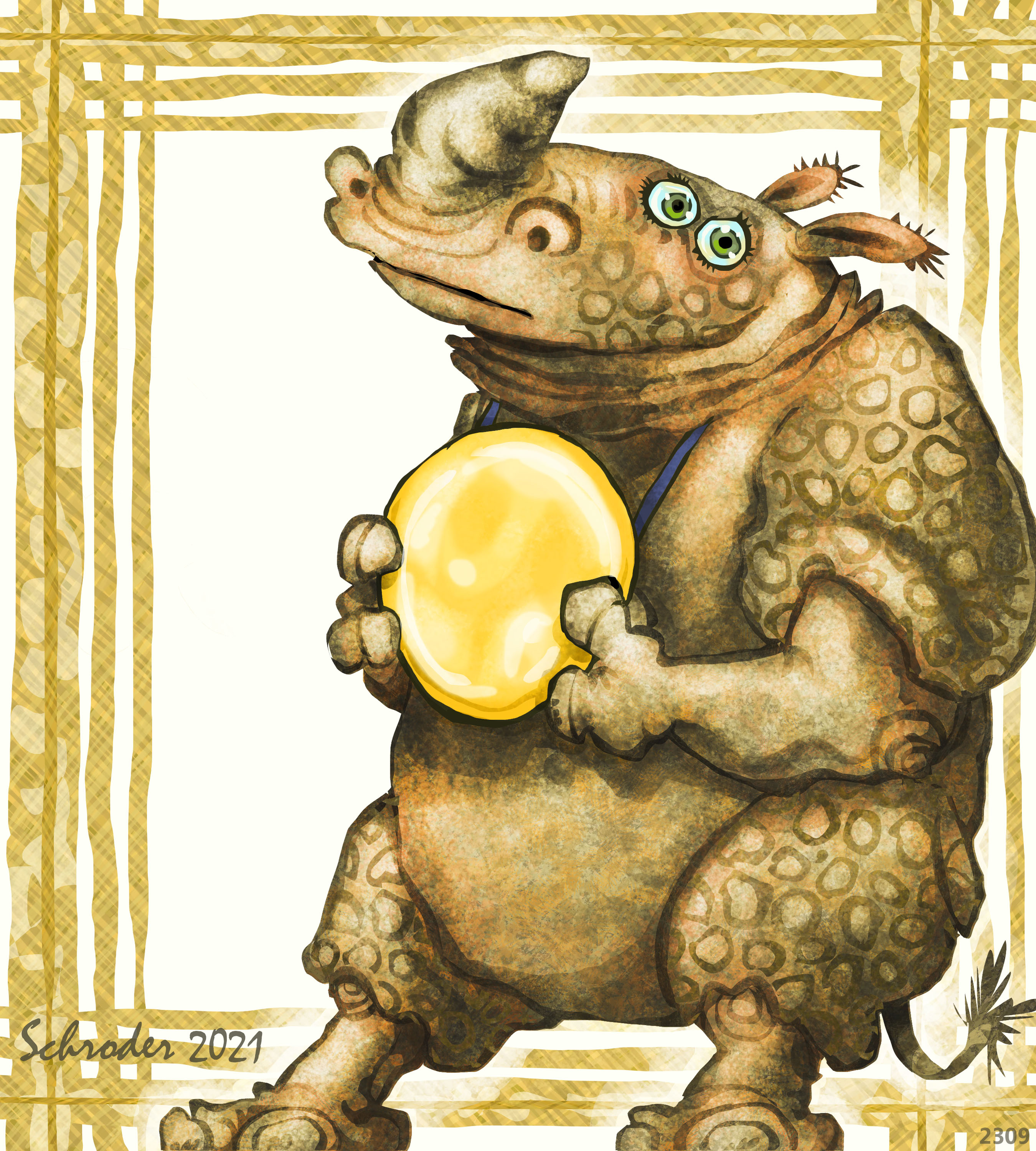
Rhinos enjoy the idea of Emojis, capturing an attitude to suit the situation. There are many of them, these Emojis. The Rhino problem is that We are so emotionally sensitive that We seldom find the right one when We need it.
We use them in correspondence to help clarify our thoughts for our Readers, who are more in sync with Emojis. For Us, there is always a fear that We might have a re-think at any moment, and forget to notify those critters most likely to be put at risk.
This is what it is to be High-Strung, sensitive to every passing whiff. And bulky.
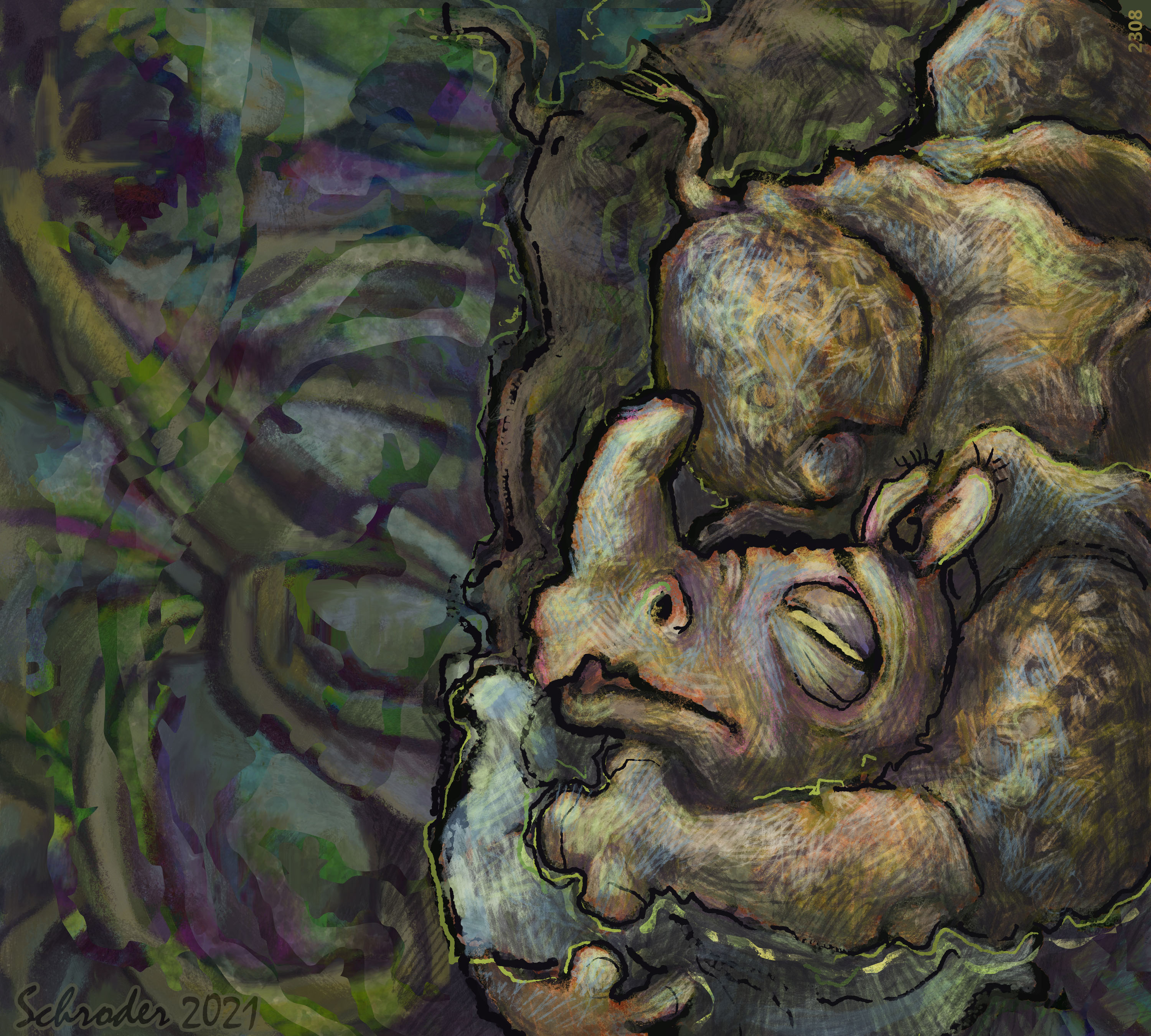
‘Hypnopompia’ is the term for a mental state where the sleeping Rhino is no longer entirely absorbed in Dreamland, but is also not yet entirely Conscious. For some Rhinos, the transition is leisurely, while for others it is condensed.
Hypnopompia might be seen as a mindset dedicated to appreciating the unpredictable shenanigans of the Unconscious Mind, which dissipates, providing mental glimpses of the Big Picture. Ending in Being Awake.
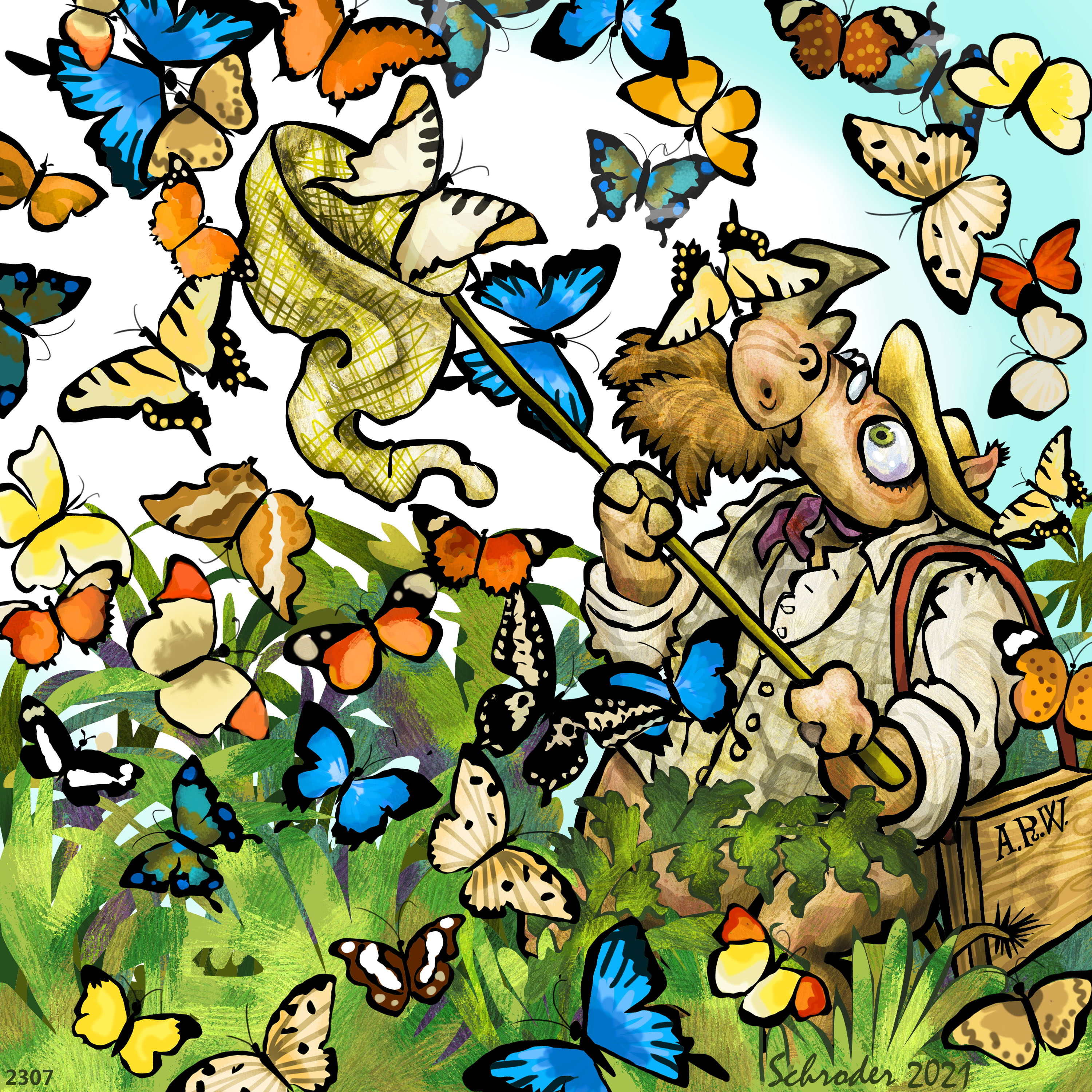
In 1859 Mr. Charles Darwin published ‘On the Origin of Species’, an astonishing book at the time. Less well known today is Mr. Alfred Russel Wallace, who had shared his studies with Darwin, and co-authored a paper with Darwin the year before.
Mr. Wallace was a naturalist, botanist, biologist and explorer, mostly in Brazil and SE Asia. He and Mr. Darwin were on the same page about Evolution. Their idea was that all living things had to adapt to the conditions wherever they lived. Makes sense to Us Rhinos; We have had lots of experience with following Nature’s lead.
Back then, Mr. Wallace was not the second-banana to Mr. Darwin. They were respected and respectful Colleagues.


 Your Inner Rhino